Hi, I’m Yan.
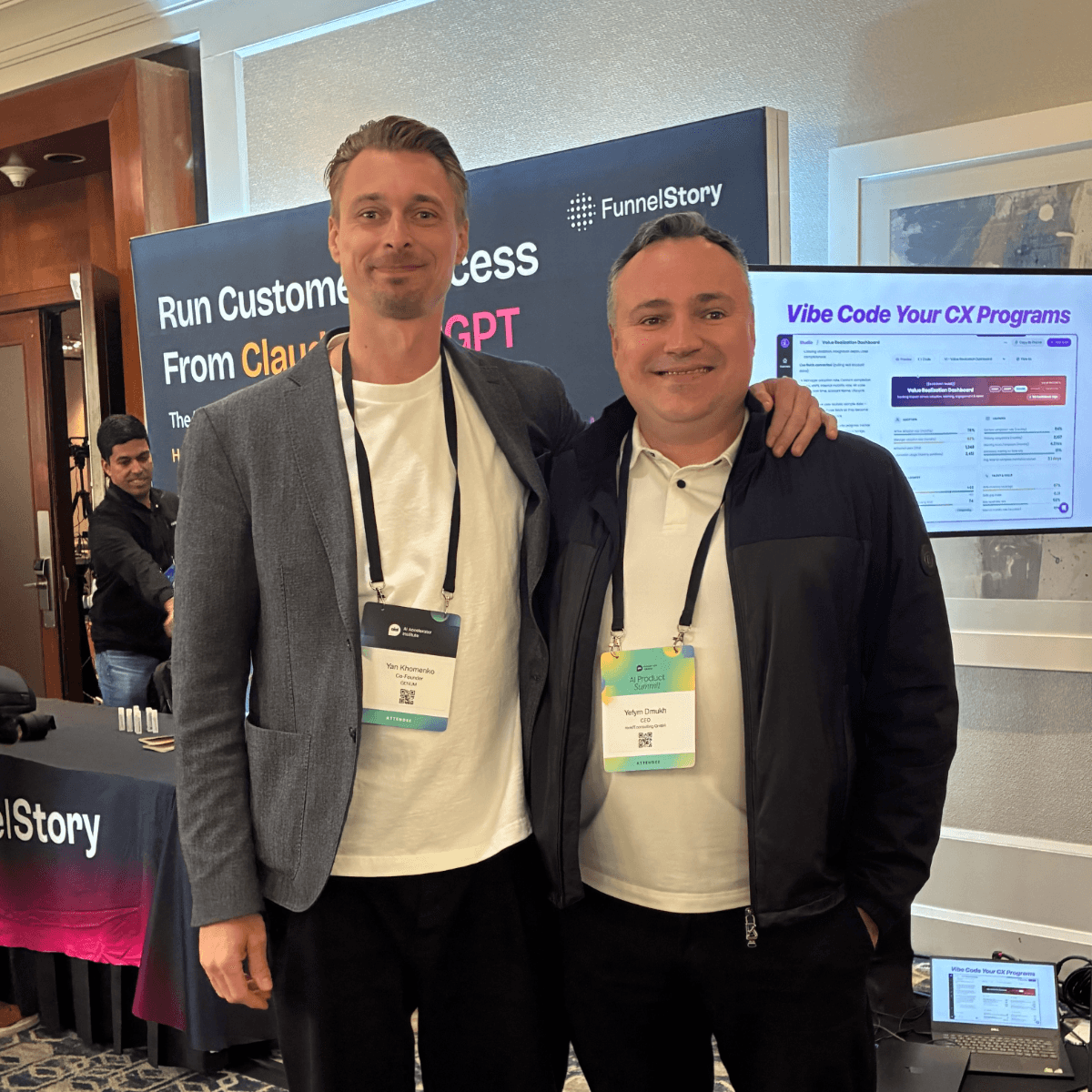
16 years, 11 projects. Yefym and I have been building digital products together since 2010. Along the way we built more than a hundred custom software integrations and showed our work at trade shows in 6 countries.
Some of those products made it. Most didn’t. And one question followed us from project to project: why can’t a good product find its first customer, even when the people behind it know exactly what they’re doing?
This is the story of the product that finally gave us the answer, and of how ProductBay was born from it.
integration

financing platform

monitoring

development company
AI marketplace
Mail Operations

matching network
The case
In early 2024 we started Genum, one of the first platforms for governed AI logic in business automation. By 2026, managing AI logic had become a global trend, and the whole world was talking about it. We had built the right thing, and we had built it early.
Our task looked simple: get Genum to the people who needed it most, the prompt engineers. We knew they were out there. We just had to reach them.
So we did what every founder is taught to do.
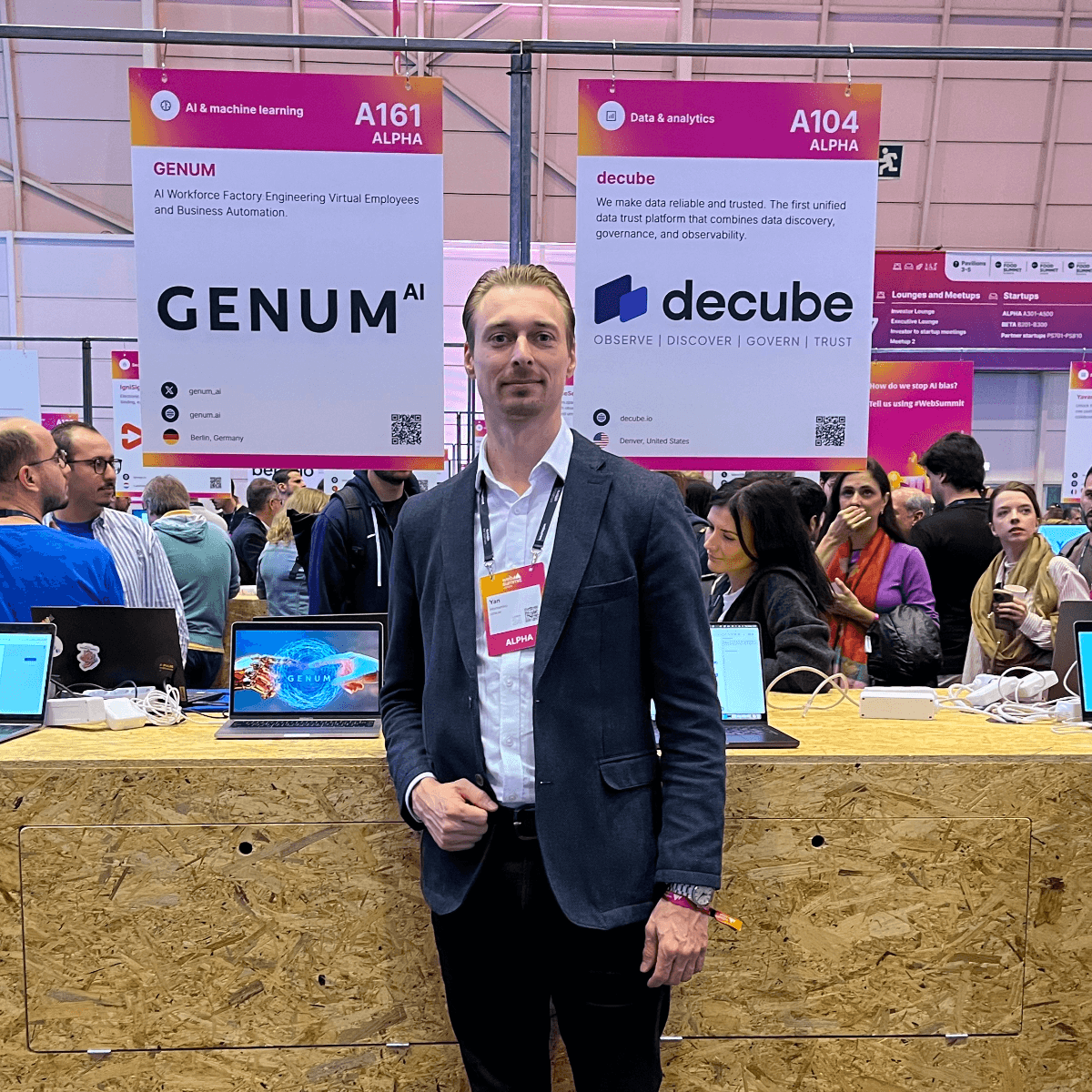
What could go wrong?
We did everything by the book. On top of the development budget, we spent more than $30,000 on social and search ads in a short time. A few people signed up for our free plan. They liked it, but none of them paid.
So we turned to cold email. We sent 200,000 messages. We rewrote the pitch again and again, changed our ICP, tried new sectors of the economy. Not one warm reply came back.
That was our first clue. AI had changed the rules of the game. Every inbox was overflowing, and people had simply stopped reading. The channels every founder relies on were broken.
If we couldn’t reach people online, we had to meet them face to face.
The final shot
We decided to put everything on one last bet: being there in person. And that meant making the hardest decision of all. We borrowed $50,000 from friends and family.
Every dollar of it mattered, but we knew exactly where we were taking it. Silicon Valley, the tech capital of the world. If there was one place where a product this new couldn’t go unnoticed, it was there.
We booked everything in advance: the trip, booths at three major events, 62 events in total. Spring 2026. Three months on the road, sometimes two events in a single day.
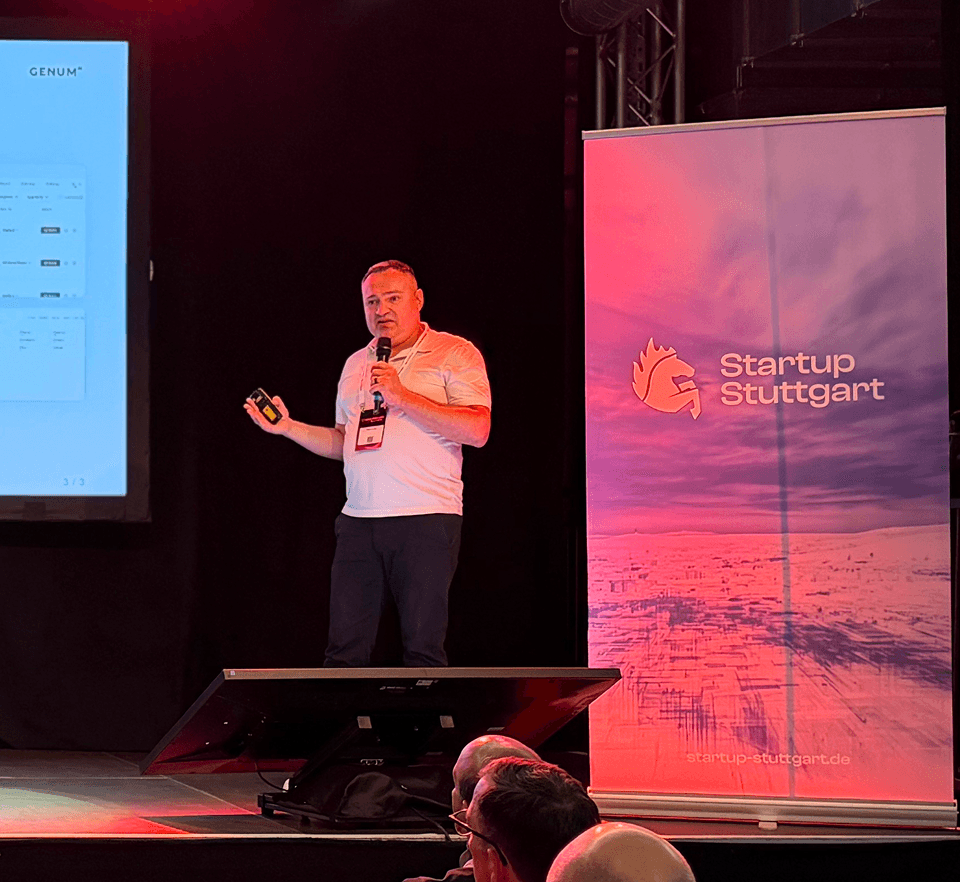
Corporations
All along the way, we were talking to some of the largest companies in food delivery, automotive, banking and other industries. We offered them a free pilot. They wouldn’t even let us show a demo. To them, a startup is a source of instability, a risk they don’t need to take.
That was our second clue. Big companies avoid startups. And startups, like us, have no budget to buy from each other.
Meanwhile, the money was running out.
On stage
On stage, Genum worked. We pitched at pitch days and venture days across the Bay Area and won three pitch competitions. The third, in early April, was the AI Startup Pitch Showcase at Pilot.com. The prize was a place in Funding Breakthrough Lab, a program for startups founded by Natalie Pan.
Investors praised the product. In three months, I met 736 people in person: founders, owners, executives and investors.
But a win on stage doesn’t pay the bills. Applause is not revenue.
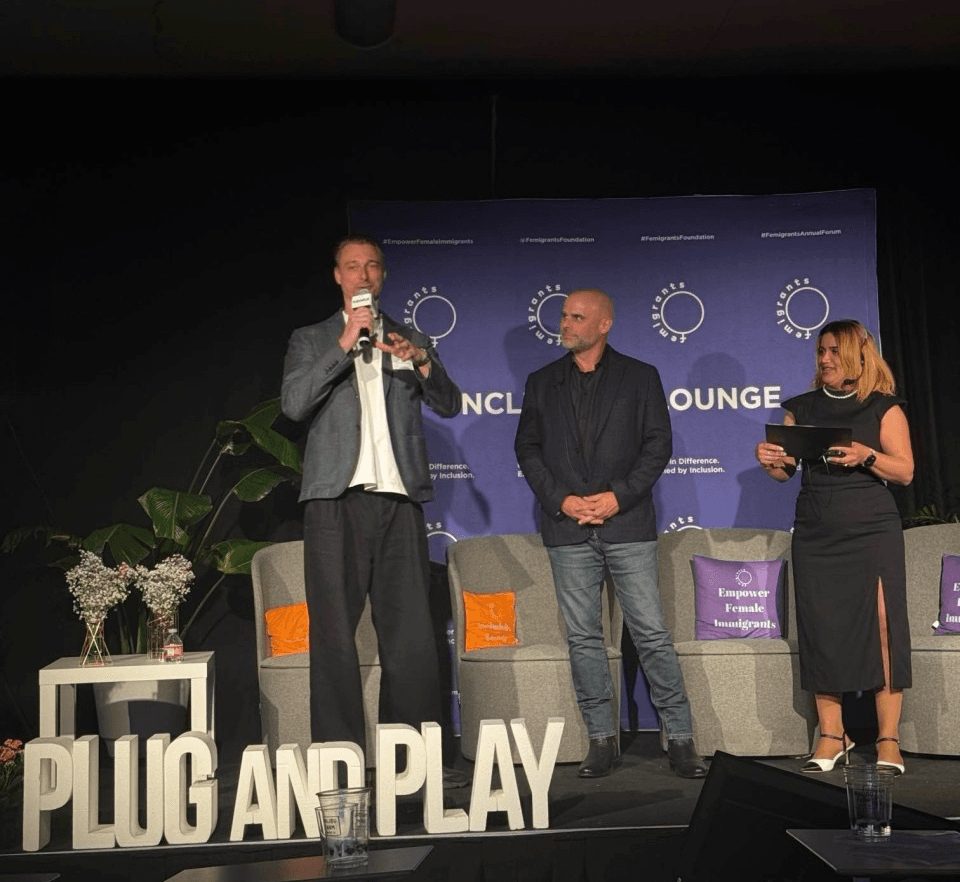
Investors
Next, we turned to investors. More than ten of them were interested in Genum, and every one said the same thing: come back when you have your first traction.
In the last three years, the world has changed. New AI startups appear every day, and the market is full of noise. For investors, technology alone is no longer worth much. Only demand is. Their job is to invest their own investors’ money safely, and we understand that.
And that’s when we hit the hardest question of all:
How do you get first customers without funding?
How do you get funding without first customers?
The booth
Over those three months, we had a startup booth at three major events. The three booths cost us $25,000. Together they drew more than 40,000 visitors, each one a chance to find our first customer.
Zero new customers.
Most of the people who stopped at our booth were founders who had come to find customers too. We traded contacts and stories, but contacts don’t pay back a loan.
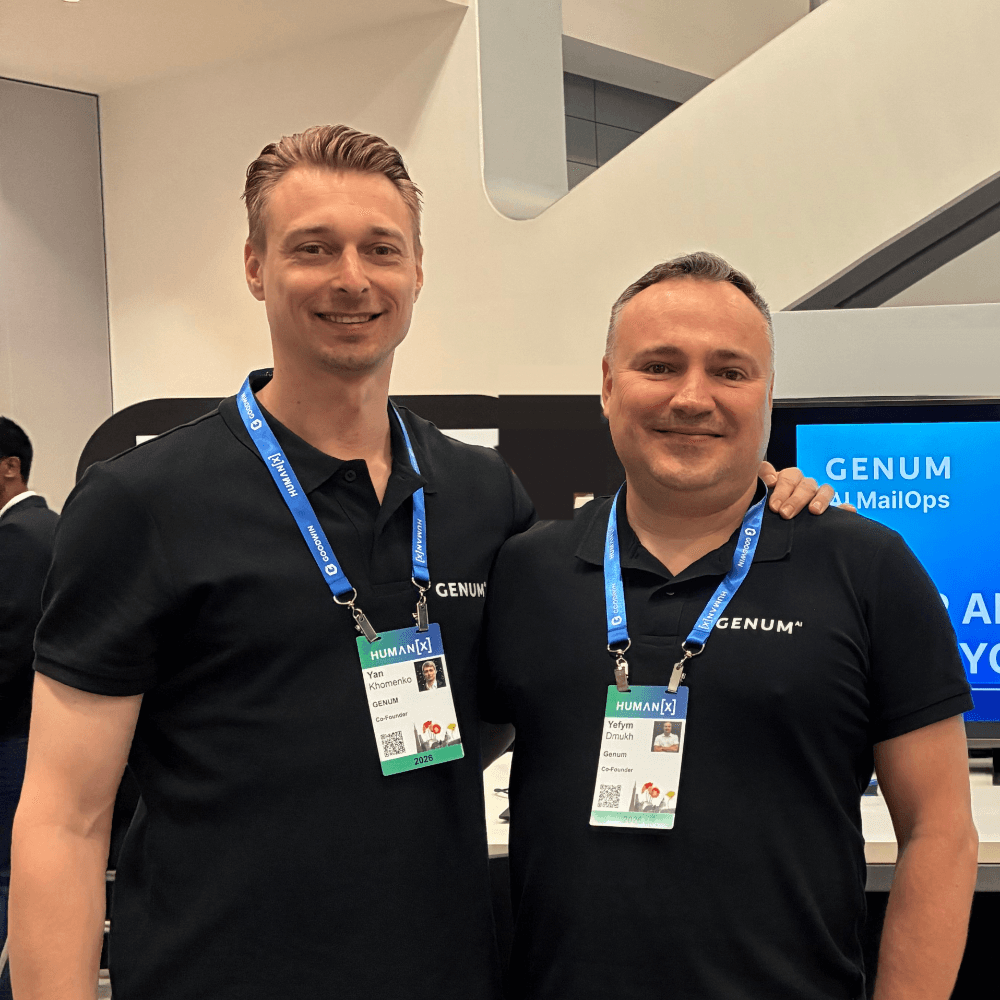
Empty-handed
The last of the borrowed money was gone. We felt awkward in front of our friends and family, the people who had believed in us enough to lend it. They understood.
After three months, we hadn’t moved a single centimeter, so we went home. It had been so hard that, for the first time in two years, Yefym and I each took two weeks off, without even discussing it with each other.
But I kept thinking about the founders I’d met at every event. Almost every story was the same: big budgets, no way to reach the first customers, problems that seemed impossible to solve. Talking to them, I came to understand their pain and the walls they kept hitting. It shaped who I am today. And one thought never left me:
I’m not alone. There are many of us. We need to build something that helps us grow together.
The insight
As soon as I came back, I said:
“Yefym, I’ve found the solution for our project and for other startup founders.”
All the clues pointed the same way. Big companies won’t let startups in, and startups have no budget. Yet every founder pays for the tools to run their company, and that money goes to the giants.
Founders are each other’s first customers. We just never buy from each other.
If we did, every payment would bring a customer back, and the money would stay in the network. No debt. No borrowing from friends and family.
We’re building a product network for founders.
A place to bring your product to market without huge budgets or superhuman effort.
To show it to the world.
To find your first customers.
To get real feedback and make your product better.
And most important:
your product becomes your buying power.
What you sell opens the door to what you need.
To every founder reading this
I’ve been where you might be right now. Most of our 11 projects launched into silence: the product was ready, the ad budget was gone, and nobody came.
Yefym and I keep going because we like hard problems, the ones most people walk away from. ProductBay is what we wish we’d had back then: a network where founders buy from each other, so your product reaches its first customers without burning your budget on ads.
We launch in Q4 2026. I’d like your product to be one of the first in the network.

 ProductBay
Startups create the future.
But they spend their money inside the old economy.
The old economy
We pay giants to run our companies.
We pay platforms to be seen.
Every year, a fortune leaves our world.
It buys tools, clicks and attention.
And it never comes back.
A one-way ticket for companies.
The Founder Economy
We believe something simple.
Every founder is both a buyer and a seller.
Every budget is someone’s revenue.
Every purchase can be a vote for another builder.
Stop funding giants, start funding each other.
Founders over giants.
Customers over clicks.
Orders over applause.
Buying power over ad spend.
Founders buy from founders.
Money moves in circles, not away.
Every product finds its customer.
Your product pays for the tools.
A new economy where founders grow by doing business with each other.
ProductBay